Difference Between Future And Forward Contract : 2026
Difference Between Future and Forward Contract: A Complete Guide for Traders & Investors (2026)
Understanding the difference between future and forward contract is one of the most important foundational concepts in derivatives trading. Whether you are a beginner trying to understand how derivatives work or an experienced trader looking to sharpen your conceptual clarity, knowing how a future and forward contract differ can directly impact your risk management, profitability, and trading decisions.
Search engines, traders, and institutions alike frequently compare forward vs future because although both contracts deal with future delivery, the structure, risk, and execution are fundamentally different.
This guide is designed to:
- Help beginners understand the basics clearly
- Help traders crack interview and exam questions
- Help investors avoid costly mistakes
Before we go deeper, let’s understand this concept intuitively.
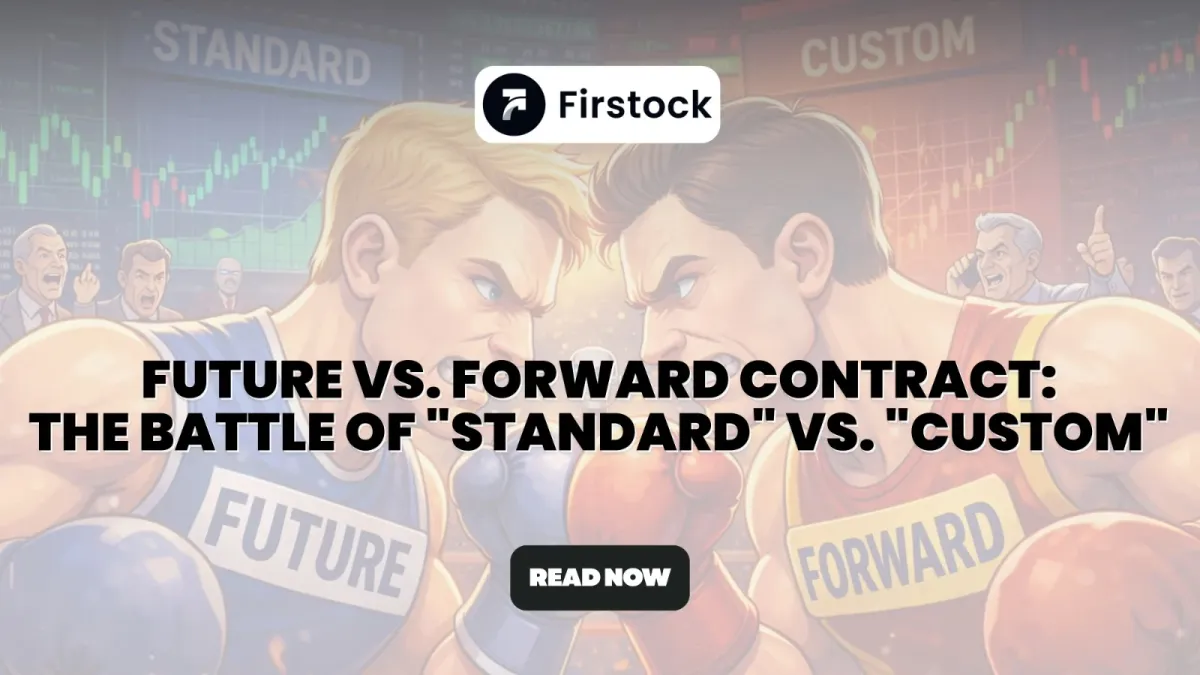
Future vs. Forward Contract: The Battle of “Standard” vs. “Custom”
Picture yourself shopping for a suit. You’ve got two ways to go about it.
First, you can visit a tailor. You pick the fabric you like, decide on the kind of buttons, get it fitted just for you, and settle on a price you'll pay next month when it’s all done.
Or, you can just walk into a mall, grab a suit off the rack in your size—M, L, XL—pay right there, and walk out.
In finance, that first choice is like a Forward Contract. The second? That’s a Future Contract.
Both are agreements to buy or sell something at a later date. But the rules of the game are completely different. If you are trading in the Indian stock market (NSE/BSE), you are likely trading Futures, but understanding Forwards is crucial to knowing why Futures exist.
In this guide, we will decode the difference between future and forward contract, the pricing math behind them, and why the “Clearing House” is your best friend in Futures trading.
What Is a Forward Contract? (The “Handshake” Deal)
A Forward Contract is a private, customized agreement between two parties to buy or sell an asset at a specified price on a future date.
Where it happens
Over the Counter (OTC). It’s a private deal, not on an exchange.
The players
Usually two financial institutions, or a business and a bank.
Key feature
You get full control. Pick the quantity, set the date, choose exactly where you want it delivered.
Real-World Example
Picture a farmer. He’s planning to harvest 500kg of wheat in three months, but he’s anxious about prices dropping. So, he walks over to the local bakery and strikes a deal: he’ll sell them all his wheat at ₹30 per kg, locked in today, and deliver it three months from now. That’s called a Forward Contract.
The Forward Contract is private, and if the bakery goes bankrupt, the farmer is in trouble (Counterparty Risk).
Why Forward Contracts Exist (Added for SEO Depth)
Forward contracts exist primarily for business risk management, not speculation. Exporters, importers, farmers, oil companies, and large manufacturers use forward contracts to lock prices and protect profit margins.
However, the very flexibility that makes forward contracts attractive also makes them risky.
What Is a Future Contract? (The “Official” Deal)
A Future Contract is a standardized legal agreement to buy or sell an asset at a predetermined price at a specified time in the future.
Where it happens
On a Stock Exchange (like NSE or BSE).
The players
Traders, Investors, FIIs, DIIs.
Key feature
It is standardized. You cannot decide the lot size or expiry date. The exchange decides it (e.g., Nifty Lot Size = 75, Expiry = last Tuesday of the month).
The “Invisible Guardian”: The Clearing House
Why can you trust a stranger on the internet to pay you profit on a Nifty trade?
Because of the Clearing House (in India, it is the NCL – NSE Clearing Limited).
- In Forwards: If Buyer Bob and Seller Alice make a deal, and Bob goes broke, Alice loses everything.
- In Futures: The Clearing House stands in the middle via a process called Novation.
Reality:Buyer Bob buys from NCL. Seller Alice sells to NCL.
Result:Even if Bob goes bankrupt, NCL has a “Settlement Guarantee Fund” to pay Alice her profit. This eliminates Counterparty Risk.
Difference Between Future and Forward Contract: The Cheat Sheet
Here is the head-to-head comparison every trader needs to memorize.
Pricing Logic: Why Are Futures More Expensive?
Have you noticed that if Nifty Spot is 24,000, Nifty Future is usually 24,100?
This is not random. It is based on the Cost of Carry model.
The Formula
Future Price = Spot Price + Cost of Carry
The Logic
If you buy a Future, you don't pay the full money today. You keep that money in the bank and earn interest. Therefore, the seller charges you a “Premium” (Cost of Carry) to compensate for the interest they are losing by holding the asset for you until expiry.
Note:In Forward contracts, the price is negotiated purely based on mutual expectation. In Futures, it is mathematically linked to the Spot price.
The “Convergence” Phenomenon
This is a critical concept for expiry traders.
- During the Month: The Future price and Spot price are different
- On Expiry Day: The Future price MUST equal the Spot price
Why?Because on the last day, there is no “future” left. The Cost of Carry becomes zero.
Trader Tip:If on Expiry day, Nifty Future is trading significantly higher than Nifty Spot, arbitrageurs will sell the Future and buy the Spot to pocket the risk-free profit, forcing the prices to align.
Why Do Traders Prefer Futures? (The “Daily” Magic)
One of the biggest differences is Settlement.
- In Forwards: You wait until the end of the contract to see if you made a profit or loss.
- In Futures: The profit/loss is calculated Daily (Mark-to-Market).
Example:You bought Nifty Futures. If Nifty goes up today, the profit is credited to your account today. If it falls, the loss is debited today. This prevents default risk because the exchange ensures everyone pays their dues daily.
Conclusion: Which One Is for You?
- If you are a Business Owner (like an exporter or farmer) looking to hedge a very specific risk without paying margin money → Forwards might be useful.
- If you are a Trader or Investor looking to speculate on price moves or hedge your portfolio → Futures are your only game.
FAQs
1. Can I trade Forward Contracts on Firstock?
No. Forward contracts are private agreements and are not traded on stock brokers’ platforms. You can only trade Futures and option trading app like Firstock.
2. What is “Counterparty Risk”?
It is the risk that the person on the other side of the deal fails to pay up.
- Forward: High Risk
- Future: No Risk
3. Do Forwards require margin?
Usually, no. Since it is a private deal, you might not need to deposit money upfront. In Futures, you must pay an initial margin (approx 20% of contract value).
4. What happens if I hold a Future contract until expiry?
- Index Futures (Nifty/Bank Nifty): Cash-settled
- Stock Futures: Physical Delivery may be required
5. Is future better than forward contract?
For retail traders, futures are safer due to exchange guarantees and liquidity.
6. Why are forward contracts risky?
Because there is no clearing house guaranteeing settlement.
7. Are futures legally binding?
Yes. Futures are standardized, regulated, and legally enforceable.
8. Which is more liquid: forward or future?
Futures contracts are far more liquid.
9. Do banks use forward contracts?
Yes. Banks and corporates commonly use forwards for hedging.
Disclaimer
The content should not be construed as investment, trading, or personal financial advice. This blog is for educational purposes only.