How to Trade High Volatility Markets | 2026 Guide
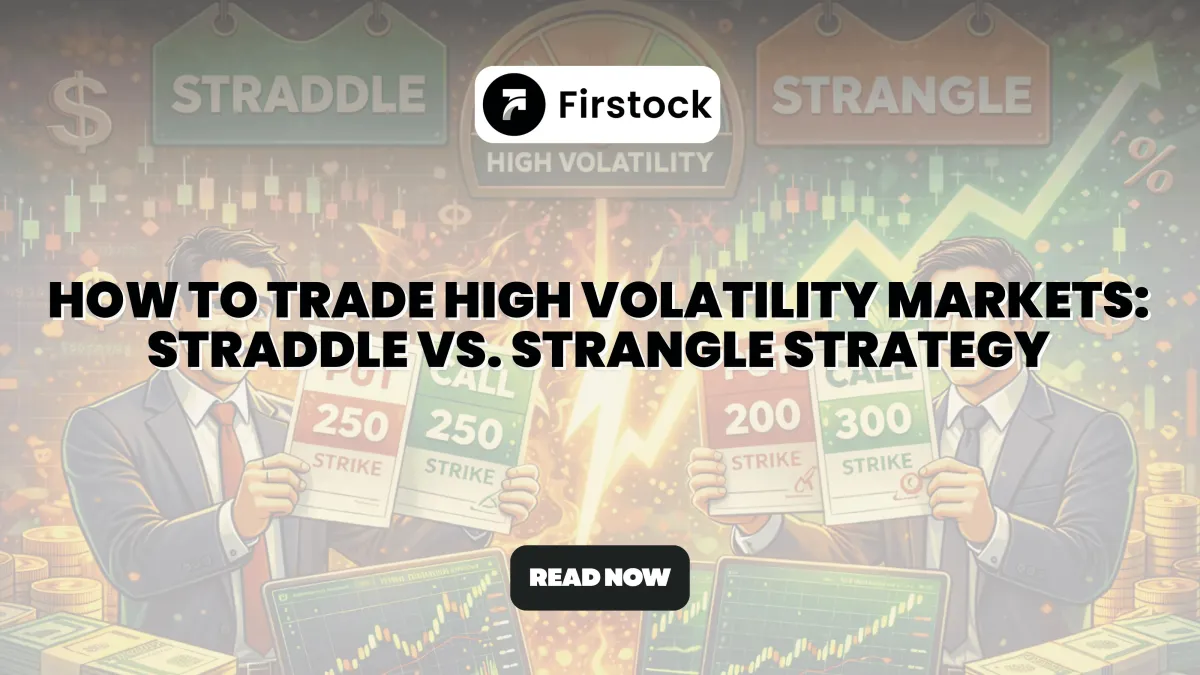
How to Trade High Volatility Markets: Straddle vs Strangle Strategy
“Chaos isn't a pit. Chaos is a ladder.” — Game of Thrones
In the stock market, chaos has a name: Volatility.
Most beginners fear volatility. They see the India VIX shooting up and immediately stay on the sidelines. But professional traders wait for these moments. Why? Because without movement, there is no profit.
However, trading High Volatility Markets with a simple Naked Call or Naked Put is nothing short of suicide.
- Guess the direction wrong → capital wiped out
- Guess the direction right but volatility collapses (IV Crush) → still a loss
So the real question is:
How do you trade when you know a big move is coming—but you don’t know the direction?
This exact situation happens during:
- Union Budget
- Election Results
- RBI Policy
- Earnings Announcements
The answer lies in non-directional option strategies.
👉 Straddle vs Strangle Strategy
What Are High Volatility Markets?
High volatility markets are periods when price movement becomes:
- Rapid
- Wide
- Emotion-driven
- News-sensitive
Volatility typically spikes during:
- Economic announcements
- Political uncertainty
- Global events
- Major corporate results
In such environments:
- Option premiums expand rapidly
- Stop losses trigger faster
- Emotional trading increases
This is why strategy selection matters more than direction prediction.
Why Directional Trading Fails in High Volatility Markets
Most beginners try to:
- Buy Calls in bullish news
- Buy Puts in bearish news
But in high volatility markets:
- You must be right on direction
- You must be right on timing
- You must survive IV Crush
That’s why professionals avoid naked options and instead use structured volatility strategies.
Strategy 1: Long Straddle – The Pure Volatility Weapon
The Long Straddle is the most aggressive way to trade volatility.
You don’t care whether the market goes up or down. You only care that it moves fast and far.
The Setup
- Buy 1 ATM Call Option
- Buy 1 ATM Put Option
- Expiry: Same for both
- Strike: Same (At The Money)
Example
- Nifty 50 Spot: 26,155
- Buy 26,150 CE → ₹134
- Buy 26,150 PE → ₹78
Total Cost = ₹212 (Maximum Loss)
How You Make Money
The index must move more than the total premium paid.
- Upper Breakeven: 26,367
- Lower Breakeven: 25,943
Why Straddles Work in High Volatility Markets
- ATM options have high Delta
- Profits start building immediately after breakout
- Perfect for sure-shot events
Best Use Case
✔ Budget Day
✔ Earnings
✔ RBI Policy
✔ Any event with immediate explosive movement
Strategy 2: Long Strangle – The Low-Cost Volatility Bet
The Long Strangle is the cheaper cousin of the Straddle.
It reduces capital risk but requires a bigger move.
The Setup
- Buy 1 OTM Call (Higher Strike)
- Buy 1 OTM Put (Lower Strike)
- Same expiry
Example
- Nifty Spot: 26,146
- Buy 26,300 CE → ₹53
- Buy 26,050 PE → ₹52
Total Cost = ₹105
Breakevens
- Upper: 26,405
- Lower: 25,945
Best Use Case
✔ Speculative news
✔ Election results
✔ When you expect a 2–3% move but want limited risk
Straddle vs. Strangle Strategy: Complete Comparison
The Silent Killer in High Volatility Markets: IV Crush
Before executing Straddle or Strangle strategies, you must understand IV Crush.
What Happens Before Big Events
- Fear rises
- Implied Volatility spikes
- Option premiums become expensive
You buy a Straddle for ₹400.
The event happens. Market moves 200 points.
Sounds good—but here’s the problem:
After the Event
- Fear disappears
- IV collapses (30 → 15)
- Premiums deflate rapidly
👉 Result: Loss despite correct movement
How Professionals Handle IV Crush
- Enter 1–2 days before the event
- Exit just before the announcement
- Prefer Monthly Expiry options
- Avoid holding weekly options through events
3 Golden Rules for Trading High Volatility Markets
1. Cut Position Size by 50%
Volatility doubles P&L swings. Trade smaller to survive longer.
2. Widen Your Stop Loss
A standard 20-point SL gets hit instantly. Use 40–50 points, compensated with smaller quantity.
3. Execution Speed Is Critical
Prices jump rapidly in volatile conditions.
👉 Use Trading App - Firstock’s Basket Order to execute both legs instantly. Entering legs one by one can destroy your risk-reward.
When Volatility Is Too High: Option Selling Strategies
When India VIX touches 20–25, buying options becomes extremely risky.
This is when professionals flip the game and sell inflated premiums.
Short Straddle – The IV Crush Play
Setup
- Sell ATM Call
- Sell ATM Put
View
- Market stays in range
- Volatility crashes post-event
⚠ Risk: Unlimited
⚠ Only for experienced traders
Short Strangle – The Safer Range Strategy
Setup
- Sell OTM Call
- Sell OTM Put
Benefits
✔ Higher probability
✔ Wider safety zone
The “Iron” Defense: Capping Unlimited Risk
Iron Fly
- Sell ATM Straddle
- Buy OTM wings for protection
✔ Fixed maximum loss
✔ Survival guaranteed even in extreme moves
Iron Condor
- Sell OTM Strangle
- Buy far OTM wings
✔ Institutional favorite
✔ Ideal during high VIX periods
Advanced Pro Tactic: Gamma Scalping
Used by professional desks managing Long Straddles.
How It Works
- Market moves up → Call profits
- Net Delta becomes positive
- Sell Futures or shares to neutralize
Benefits
✔ Lock profits during swings
✔ Works best in choppy volatile markets
✔ Turns volatility into an ally
Exit Strategy: Knowing When to Fold
For Long Straddle & Strangle
- Double Rule: If premium doubles → book 50%, rest free trade
- Time Rule: If expected move doesn’t happen → exit immediately
For Short Strategies
- 25% Rule: Premium ₹100 → SL at ₹75
- Breakeven Rule: Exit if spot touches breakeven
Which Strategy Works Best for Each India VIX Level?
Summary: High Volatility Markets Checklist
✔ Big event ahead
✔ Direction unclear
✔ Choose Straddle or Strangle
✔ Monitor IV levels
✔ Respect risk management
FAQs
1. How to trade high volatility markets safely?
Use non-directional strategies like Straddles, Strangles, Iron Condors, reduce position size, and avoid naked options.
2. Straddle vs Strangle strategy: which is better?
Straddle has higher probability but higher cost. Strangle is cheaper but needs a bigger move.
3. What is the biggest risk in high volatility markets?
IV Crush and lack of price movement.
4. Are these strategies suitable for intraday trading?
Yes, but only on event-driven days.
5. Why do professionals prefer Iron Condors?
Because risk is capped and probability of profit is high.
Final Disclaimer
The content should not be construed as investment, trading, or personal financial advice. This blog is for educational purposes only.