Index Futures Trading: Nifty & Bank Nifty Futures | 2026
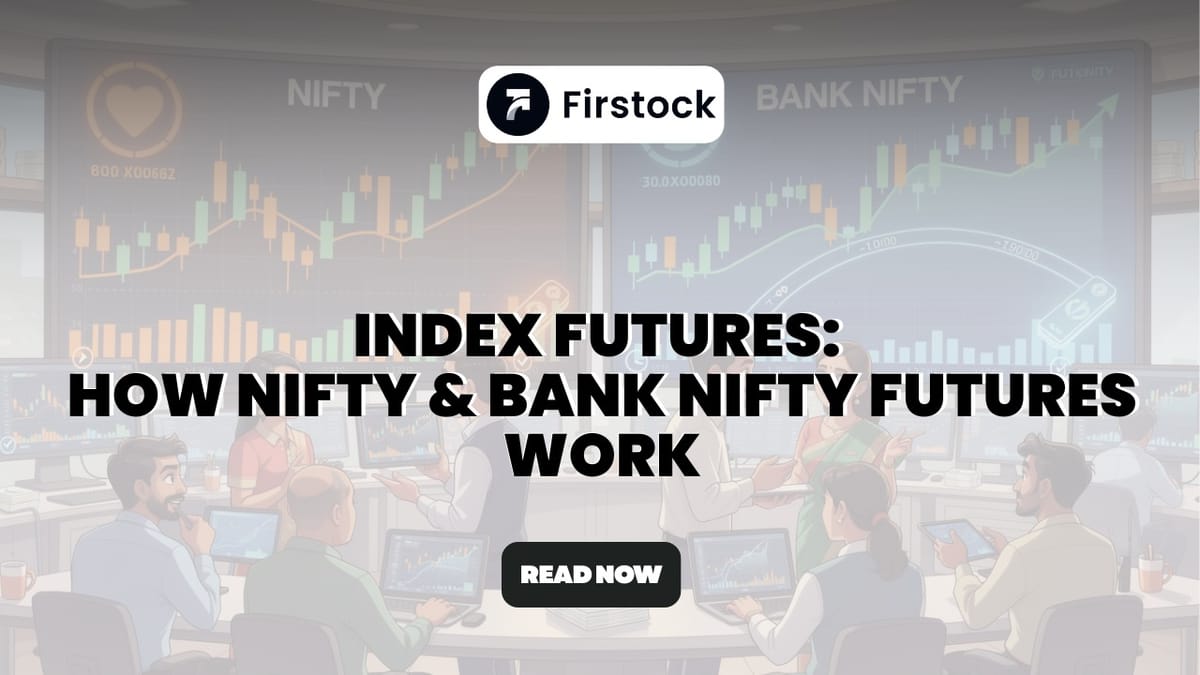
Index Futures: How Nifty & Bank Nifty Futures Work (Complete 2026 Guide)
If you have been tracking the stock market, you have likely heard traders say, “I bought Nifty” or “I sold Bank Nifty.”
Since you cannot directly buy an index like a stock, what are they actually trading?
The answer is index futures.
If you want to ride the ups and downs of the whole market without getting bogged down picking individual stocks, trading index futures is the way to go. But what exactly are index futures, and what risks are you signing up for?
Let’s break it down, especially focusing on India’s two big players: Nifty Futures and Bank Nifty Futures.
What Is Index Futures? (Simple Explanation)
At its simplest, a future is just a contract.
Two people agree to buy or sell something — in this case, not an actual stock but a whole market index — at a set price on a set date in the future.
When the thing you’re trading is a market index, like the:
—you’re dealing with index futures.
You are not buying shares of HDFC Bank or Reliance here.You’re betting on where the entire market is headed.
The Basic Concept
If you believe the market is going to rise → Go Long (Buy Futures)If you believe the market is going to drop → Go Short (Sell Futures)
This is the core idea behind index futures investing.
Nifty Futures – Complete Guide
What Are Nifty Futures?
Nifty Futures track the NIFTY 50, which represents the top 50 companies listed on the National Stock Exchange of India.
These companies span across sectors like:
- Banking
- IT
- FMCG
- Oil & Gas
- Pharma
- Auto
So when you trade Nifty Futures, you are effectively taking a position on the broader Indian economy.
Why Trade Nifty Futures?
- Broad diversification
- Lower volatility compared to Bank Nifty
- Ideal for hedging portfolios
- Suitable for swing and positional traders
- High liquidity
Because of its diversified nature, Nifty Futures are often preferred by beginners in index futures investing.
Bank Nifty Futures – High Volatility Instrument
What Are Bank Nifty Futures?
Bank Nifty Futures derive their value from the NIFTY Bank.
This index includes major banking giants such as private and public sector banks.
Unlike Nifty 50, Bank Nifty is concentrated only on the banking sector.
Why Bank Nifty Futures Are Popular
- Extremely high volatility
- Sharp intraday swings
- Strong reaction to RBI policies
- Attractive for scalpers & intraday traders
Because banking stocks carry high weightage in the market, any news from RBI or global financial markets can cause aggressive price movements.
How Index Futures Trading Works (Mechanics Explained)
Trading index futures is different from the cash market.
You do not buy individual shares.You trade standardized contracts.
1. Lot Size
Futures must be traded in fixed lots.
- Nifty Futures Lot Size: Usually 65
- Bank Nifty Futures Lot Size: Usually 30
(Note: Lot sizes are revised periodically by NSE.)
Example Calculation
If Nifty is trading at 24,000:
24,000 × 65 = ₹15,60,000
That means one Nifty futures contract gives you exposure of ₹15.6 Lakhs.
2. Margin (Leverage System)
You do not pay ₹15.6 Lakhs.
Instead, you pay margin (typically 10–15%).
So you may need around ₹2,00,000 – ₹2,50,000 per lot.
This is why index futures investing is called leveraged trading.
Why Leverage Is Powerful
If Nifty moves 2%,Your capital return can be much higher than 2%.
But if it moves against you, losses are also magnified.
This is why risk management is critical.
3. Expiry Dates
Index futures expire on the last Tuesday of every month.
Types of contracts available:
- Near Month
- Next Month
- Far Month
If you do not close your position, the contract is cash settled automatically.
No stocks are delivered.
Why Traders Choose Index Futures Investing
1. Hedging (Portfolio Protection)
If you hold stocks worth ₹10 Lakhs and fear a market crash:
- Sell Nifty Futures
- If market falls → Futures profit offsets portfolio loss
Institutions and fund managers use this strategy regularly.
2. Short Selling Advantage
In index futures, you can sell first and buy later.
This allows you to profit even in falling markets.
Unlike cash stocks, there are no major restrictions for shorting futures.
3. Lower Cost Trading
Brokerage in futures is generally lower relative to turnover.
This makes it attractive for active traders.
Many traders today prefer using advanced platforms like Firstock – option trading app, which offers seamless futures execution, real-time data, and competitive brokerage for derivatives trading.
A stable and low-latency platform becomes especially important when trading volatile instruments like Bank Nifty Futures.
Risks in Index Futures Trading
Index futures are powerful but risky.
Major Risks:
- Leverage risk
- Volatility risk
- Overnight gap risk
- Margin call risk
- Emotional trading risk
If the market moves sharply against you, your broker may issue a margin call.
In extreme cases, your entire margin can be wiped out.
Risk Management in Index Futures
If you want to survive in index futures investing, follow these rules:
1. Always Use Stop Loss
Never trade without defined risk.
2. Proper Position Sizing
Do not use full margin capacity.
3. Avoid Overtrading
Especially in Bank Nifty.
4. Trade With Strategy
Use technical analysis, price action, and trend confirmation.
5. Choose Reliable Trading Platform
Execution speed matters significantly in futures trading.
Can You Hold Index Futures Long Term?
Not directly.
Contracts are valid only up to three months.
If you want to continue your position, you must:
- Close current month
- Open next month contract
This process is called rollover.
Is Index Futures Trading Riskier Than Stocks?
Yes.
Example:
If you trade with 15% margin and index falls 15%:
You may lose 100% of your capital.
In stocks, 15% fall = 15% portfolio loss.
This is why beginners must learn risk control before entering index futures investing.
Advanced Concepts in Index Futures
1. Open Interest
Open interest shows total outstanding contracts.
Rising price + rising OI = Strong trendFalling price + rising OI = Strong short build-up
2. Basis & Premium
Futures usually trade at a premium to spot due to cost of carry.
Near expiry, futures and spot converge.
3. Arbitrage
Traders exploit price differences between spot and futures.
Final Thoughts
Index futures — especially Nifty Futures and Bank Nifty Futures — are powerful financial instruments.
They offer:
- High liquidity
- Leverage
- Ability to profit in rising & falling markets
- Hedging opportunities
But remember:
Leverage amplifies profits — and losses.
If you are starting in index futures investing:
Focus on capital protection.Learn risk management.Trade systematically.Avoid emotional decisions.
That is how professional traders survive and grow consistently in index futures markets.
FAQ
1. What is index futures in simple terms?
Index futures are contracts that allow you to buy or sell a market index at a future date at a predetermined price.
2. What is index futures investing?
Index futures investing means taking leveraged positions in market indices like Nifty or Bank Nifty to profit from price movements.
3. How much capital is required to trade Nifty Futures?
Usually ₹2–2.5 Lakhs per lot depending on volatility and margin requirements.
4. How are Nifty Futures and Bank Nifty Futures different?
5. What happens if I don’t square off before expiry?
Index futures are cash settled.Your profit or loss is automatically adjusted.
6. Can beginners trade index futures?
Beginners should first learn about leverage and risk before trading futures.
7. Are index futures better than options?
Futures are linear instruments.Options involve time decay and Greeks.
Both have different risk profiles.
8. Is Bank Nifty more volatile than Nifty?
Yes. Bank Nifty shows sharper intraday swings.
9. Can I lose more than my margin?
In extreme gap scenarios, yes.
10. Which trading app is suitable for index futures?
Choose a platform with fast execution, stable servers, and competitive brokerage. Many traders prefer platforms like Firstock – Stock Trading App for active derivatives trading.
Disclaimer
Investment in securities market are subject to market risks. Read all related documents carefully before investing.