Spot Market vs Futures Market: Key Differences Explained
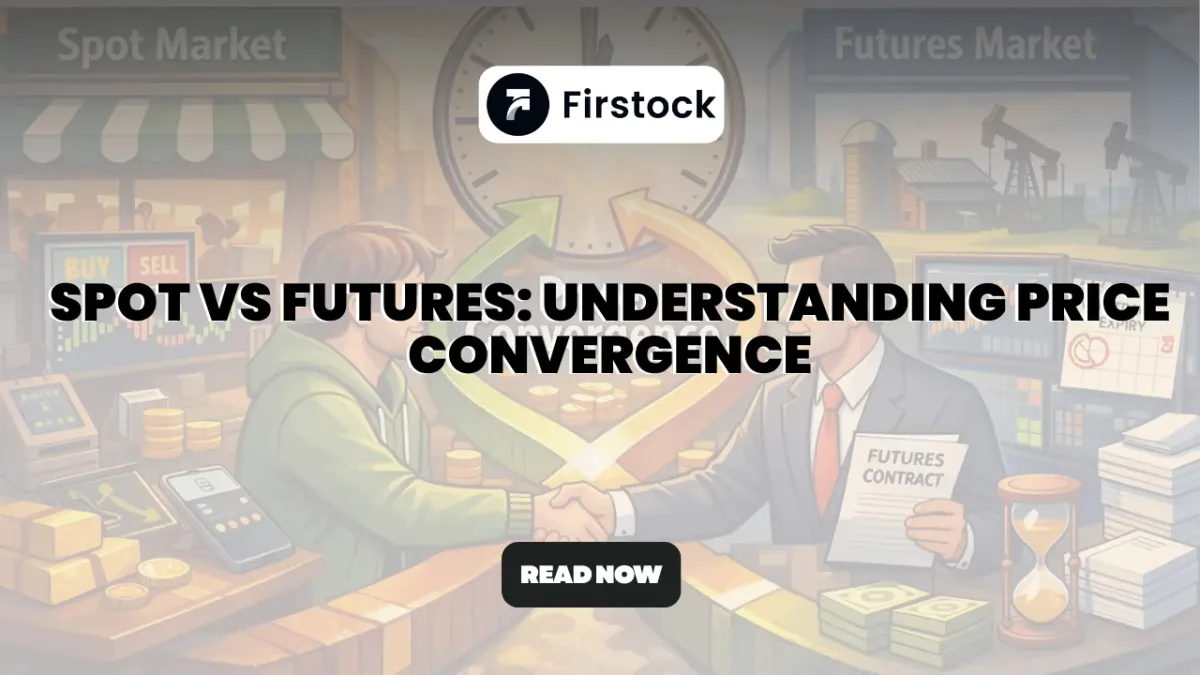
Spot Market vs Futures Market : Understanding Price Convergence (Ultimate 2026 Guide for Traders & Investors)
If you’ve ever looked at the market and thought:
👉 Why is Nifty Spot at 25,000 but Futures at 25,100?
👉 Why does this gap disappear on expiry day?
You’re asking the right question that separates beginners from professional traders.
Most people believe spot market and futures market are two different worlds.
❌ Wrong.
👉 They are the same market, connected by a powerful financial force called price convergence.
This guide is designed to help you:
- Understand what is spot market
- Learn what is futures market
- Decode price differences
- Master convergence trading strategies
- Use this knowledge for real trading profits
Quick Answer
Spot market vs futures market difference:
- Spot Market: Immediate buying/selling at current price
- Futures Market: Agreement to buy/sell at a future date
👉 The price difference exists due to cost of carry (interest + time)
👉 On expiry day, both prices converge (become equal)
What is Spot Market? (The Real Market Price)
The spot market is the actual price of an asset right now.
✅ Definition
The spot market is where financial instruments are traded for instant delivery and settlement.
Example
- You buy Reliance shares at ₹2,500
- Shares are credited in your Demat account (T+1)
Key Features of Spot Market
Key Insight
👉 The spot market reflects true demand and supply.
What is Futures Market? (The Expected Price)
The futures market is where traders bet on future price movements.
Definition
A futures contract is an agreement to buy/sell an asset at a fixed price on a future date.
Example
- You buy Nifty Futures at 25,100
- Contract expires on last Thursday
- Settlement happens automatically
Key Features of Futures Market
Key Insight
👉 Futures reflect market expectations, not current reality.
Why Futures Price Differs from Spot Price?
This is the core concept every trader must understand.
Cost of Carry Model
Formula:
👉 Futures Price = Spot Price + Cost of Carry
Example (2026 Scenario)
Explanation
If you buy in spot market:
- You pay full capital
- Lose interest income
If you trade in futures market:
- You pay margin (~15–20%)
- Keep remaining capital invested
👉 This creates a premium in futures
Premium vs Discount (Market Psychology)
🟢 Premium (Contango)
- Futures > Spot
- Indicates bullish sentiment
🔴 Discount (Backwardation)
- Futures < Spot
- Indicates bearish sentiment OR dividend adjustment
The Convergence Rule (Most Important Concept)
👉 On expiry day:
✅ Futures price = Spot price
How Convergence Happens
Why This Happens
Because of arbitrage traders.
Example:
- Buy Spot at ₹25,300
- Sell Futures at ₹25,350
- Earn ₹50 risk-free
👉 This forces prices to merge.
How to Trade the Convergence (Real Strategies)
1. Arbitrage Trading (Low Risk Strategy)
Setup:
- Spot = ₹100
- Futures = ₹105
Action:
- Buy Spot
- Sell Futures
Profit:
👉 ₹5 locked profit
2. Basis Trading (Advanced Strategy)
Formula:
👉 Basis = Futures – Spot
Basis Signals
3. Expiry Week Strategy (High Accuracy)
During expiry week:
- Gap shrinking → Trend weakening
- Gap expanding → Strong momentum
👉 Used by professional traders
Dividend Trap Explained (Critical Concept)
Sometimes futures trade below spot.
Example
Why?
- Spot holders receive dividend
- Futures traders don’t
👉 Futures adjust earlier
Contango vs Backwardation (Deep Analysis)
🟢 Contango
- Futures > Spot
- Normal market condition
- Indicates growth expectation
🔴 Backwardation
- Futures < Spot
- Fear or dividend
- Short-term weakness
Physical Settlement (Biggest Risk in India)
Since 2019, stock futures are physically settled.
Real Example
👉 If you don’t exit:
- You must buy full shares
Pro Rule
👉 Always exit stock futures before expiry
Latest Market Insights (2025–2026)
Based on recent market trends:
- Nifty trades in premium during bullish cycles
- Basis expansion seen during strong FII buying
- Backwardation occurs during:
- Market panic
- Dividend-heavy stocks
Data Snapshot
Why Firstock is Best for Spot & Futures Trading
If you want to apply this strategy in real markets, platform matters.
👉 Firstock is a SEBI registered stock trading app offering stocks, futures, options, IPOs, and mutual funds in one place
Key Benefits of Firstock
- ₹0 brokerage on delivery
- ₹20 flat fee on F&O
- Advanced charts & tools
- Beginner-friendly interface
- 99.9% uptime
Pricing Comparison
👉 Perfect for:
- Beginners
- Active traders
- Options traders
Spot vs Futures (Complete Comparison)
Pro-Level Trading Insights
- Spot = Anchor
- Futures = Sentiment
- Basis = Momentum indicator
- Convergence = Guaranteed
👉 Smart traders track price relationship, not price alone
Advanced Trading Checklist
Before taking any trade:
✔ Check Spot vs Futures gap
✔ Identify premium/discount
✔ Track basis movement
✔ Check dividend announcements
✔ Monitor expiry week behavior
Final Verdict
The relationship between spot market and futures market is the foundation of derivatives trading.
👉 Spot shows reality
👉 Futures show expectation
👉 Convergence ensures fair pricing
Final Thought
👉 Spot is the anchor. The future is the kite.
👉 The kite may fly high or low, but it always comes back.
FAQs
1. What is spot market?
The spot market is where assets are traded instantly at current prices.
2. What is futures market?
A market where contracts are traded for future delivery at fixed prices.
3. Why futures price is higher than spot?
Due to cost of carry (interest + time value).
4. Can spot be higher than futures?
Yes. This is called backwardation.
5. What happens on expiry day?
👉 Futures and spot prices become equal.
6. Is futures trading risky?
Yes. Due to leverage and volatility.
7. What is basis in trading?
Difference between futures and spot price.
8. Can I hold futures till expiry?
- Index futures → Safe
- Stock futures → Risky
9. What is arbitrage trading?
Buying in spot and selling in futures to earn risk-free profit.
10. Which is better: spot or futures?
- Spot → Investors
- Futures → Traders
Disclaimer
Investments in securities markets are subject to risks. Read all documents carefully before investing.